
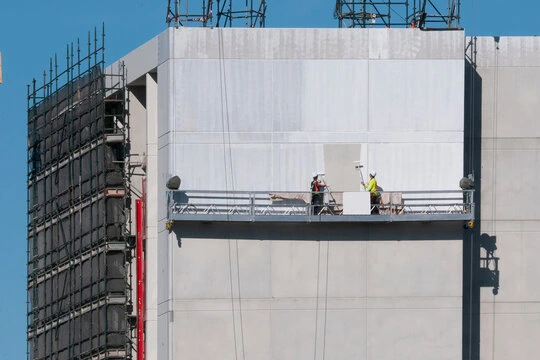
The best scaffolding type depends on three things: how high you’re working, how much load the platform has to carry, and how much room you have on site. For most Brisbane homes, a lightweight aluminium scaffold does the job. For commercial builds and heavy trades, steel system scaffold is the standard. For tall facades that are hard to reach from the ground, a swing stage often beats anything built upward from the ground.
If you’re weighing up scaffolding solutions for a renovation or a commercial build, the detail below will help you ask better questions and avoid paying for the wrong setup.
Matching the Scaffolding Type to the Job
Here’s how most Brisbane projects line up:
| Project | Best scaffolding type | Why it fits |
| Home repaints, gutters, small renovations | Aluminium scaffold | Light, quick to erect, gentle on lawns and floors |
| Commercial fit-outs, new builds, multi-storey work | Steel system scaffold | High load capacity, flexible layouts |
| High-rise facade repairs, glazing, sealing, cleaning | Swing stage | No ground-up structure, easy to reposition |
| Curved walls, heritage buildings, awkward shapes | Tube and coupler | Adapts to almost any geometry |
| Bridges, rail corridors, dams | Specialist engineered scaffold | Designed around the site, not a catalogue |
Every site has quirks, so treat this as a starting point rather than a final spec.
What Decides the Right Scaffolding Type?
Four factors narrow the choice faster than anything else.
Height and reach: Low-level work on a single- or double-storey home rarely needs more than a simple access platform. Once you’re working above three or four storeys, you’re looking at engineered systems or suspended access.
Load: A painter and a bucket weigh very little. A crew of bricklayers with stacked blocks weighs a lot. Scaffolds are rated by duty class, and the scaffolding type you choose has to carry the heaviest realistic scenario on the job, not the average day.
Site conditions: Narrow side access, soft or sloping ground, overhead powerlines and neighbouring buildings all rule options in or out. Brisbane’s storm season adds another layer, because wind load rises sharply once a scaffold is wrapped in shade cloth or containment sheeting.
Duration and budget: Short jobs favour lightweight systems that go up and come down fast. Long projects can justify heavier setups. Whether you need supply only or a full erection service also changes the cost picture, which we cover below.
Aluminium Scaffolding: The Go-To for Residential Work
If you’re after residential scaffolding Brisbane builders and homeowners can rely on, aluminium is usually the first option. It’s noticeably lighter than steel, so crews can carry it through tight side access, set it up quickly, and avoid heavy point loads on pavers, decking or interior floors. It also doesn’t rust, which helps in Brisbane’s humidity.
That weight advantage is why aluminium scaffolding Brisbane projects often include indoor work: stairwells, double-height ceilings, and rooms where a ground-based steel frame would be overkill. Mobile towers on castors let a single trade move along a wall without dismantling anything. Many of these setups use lightweight aluminium scaffolding that one small crew can erect in a few hours.
The trade-off is capacity. Aluminium isn’t the right scaffolding type for heavy masonry, large material stacks or very tall builds.
Short-term aluminium scaffold hire Brisbane customers choose is common on jobs such as roof repairs, gutter replacement, exterior painting and window work, where you need safe access for days or a couple of weeks rather than months.
Steel System Scaffolding for Commercial Projects
When people search for commercial scaffolding Brisbane projects depend on, they’re usually looking at modular steel systems. Systems such as Kwikstage and Cuplock use pre-made components that lock together in repeatable bays. They carry heavy loads, support multiple working levels, and can include stair towers, loading platforms and edge protection as part of the same structure.
This scaffolding type is the workhorse of commercial construction because it’s strong and adaptable. You can adjust bay sizes to suit the building, build up several storeys, and add protection such as debris netting or hoardings.
The downsides are practical. Steel is heavier, installation takes more labour, and the footprint on the ground is bigger. On a tight inner-city site, that matters.
Tube and Coupler: When the Structure Isn’t Standard
Tube and coupler scaffolding is built from individual steel tubes joined with couplers on site. It’s slower to erect than a modular system, but it’s the most adaptable scaffolding type when a building has curves, steps, odd roof lines or plant that has to be worked around.
It relies heavily on the skill of the scaffolder. That’s why it tends to appear on heritage restorations, complex industrial sites and any job where a standard frame simply won’t fit.
Swing Stages for High-Rise and Hard-to-Reach Facades
A swing stage is a suspended platform hung from rigging on the roof by wire ropes. Workers can raise and lower it along the face of a building for repairs, glazing, cladding, sealant, painting or cleaning.
The big advantage is that nothing has to be built up from the ground. That frees up the footpath, car park or garden below, and a swing stage can be repositioned along a facade much faster than a fixed scaffold can be extended.
The catch is that it needs proper anchor points and an engineered setup. Swing stage installation and setup should only be done by a competent team, and the roof structure has to be able to support the rigging. For a tall building, it’s worth asking about swing stage hire in Brisbane alongside a conventional scaffold quote, because the cost and programme can look very different.
Specialist Scaffolding for Bridges, Rail and Dams
Some structures don’t suit any off-the-shelf approach. Bridge scaffolding systems have to deal with spans, water, traffic or rail below. Rail scaffolding works within strict access windows and clearance limits. Dam scaffolding, whether it’s for dam face access or inspection work, has to cope with steep faces, remote locations and difficult loading.
On projects of this kind, the right scaffolding type is designed around the structure, with engineering input and a clear plan for installation, inspection and removal. Teams that regularly handle bridge and rail scaffolding understand the access constraints before a program is locked in, which is worth confirming before you commit.
Hire or Full Erection: Which Service Do You Need?
Scaffold hire in Brisbane generally means the equipment is supplied, and sometimes erected, for a set period. A full scaffolding erection service covers design, installation, inspections, alterations and dismantling.
Supply-only hire suits licensed crews who build their own scaffolds. Everyone else is usually better off with a full service. Under Queensland rules, scaffolding work where a person or object could fall more than four metres must be done by someone holding the right high-risk work licence, so DIY isn’t an option on anything tall.
Queensland Safety and Compliance Basics
Whichever scaffolding type you choose, the safety rules stay the same. WorkSafe Queensland classifies scaffolding work as high-risk work that requires appropriate licensing, and its scaffolding guidance and Code of Practice are the reference point for builders and contractors.
When you hire a scaffolder, ask for:
- Current high-risk work licences for the crew (basic, intermediate or advanced, depending on the job)
- Proof of public liability insurance
- A handover certificate on higher scaffolds
- Inspection after installation, after any alterations, and after weather events that could affect stability
A scaffolder who answers these questions easily is usually one you can trust with the job.
Common Mistakes When Choosing a Scaffolding Type
- Choosing on price alone: The cheapest quote can leave out inspections, alterations or dismantling.
- Underestimating load: If three trades will share the platform, say so upfront.
- Forgetting access: A scaffold that can’t physically get to the site is no use. Mention side access, slopes and overhead lines early.
- Ignoring wind and weather: Wrapped scaffolds catch wind. If you want sheeting or netting, tell your scaffolder when you request the quote.
- Leaving it late: Booking scaffold the day before work starts leaves no room for site checks or design.
Getting the Right Scaffolding Type for Your Project
The right scaffolding type comes down to four things: how high you’re working, how much weight the platform carries, what your site allows, and how long you need access. Aluminium suits most residential jobs because it’s light and quick to erect. Steel system scaffolding carries the heavier loads of commercial work, tube and coupler handles awkward structures, and swing stages give you access to tall facades without building up from the ground. Bridges, rail corridors and dams call for specialist, engineered scaffolds. Whichever option fits, make sure the crew holds the right high-risk work licence and that the scaffold is inspected before anyone climbs it.
If you’re still weighing up your options, speak to the team at Complete Scaffold Solutions. Send through your address, working height and timeline, and you’ll get a clear quote along with a recommendation on the most practical setup for your site. Contact us today to book a site assessment or request scaffold hire in Brisbane before your project start date.
Frequently Asked Questions
1. What is the most common scaffolding type for houses in Brisbane?
Aluminium scaffolding is the usual choice for residential work. It’s light, quick to erect and easy to fit around garden beds, pools and tight side access. Steel is used when the job involves heavy loads or multiple storeys.
2. How much does scaffold hire cost in Brisbane?
It varies with the size of the scaffold, the hire period, the site access and whether you need erection and dismantling included. The most reliable way to get a number is to send your address, working height and dates for a quote.
3. Do I need a licensed scaffolder?
In Queensland, scaffolding work where a person or object could fall more than four metres requires a high-risk work licence. Even on lower jobs, a licensed professional is the safer option.
4. Do I need council approval for scaffolding?
If the scaffold sits on or over a footpath, road or other public land, you will probably need approval from Brisbane City Council. Check the requirements before booking, and ask your scaffolder what they can handle for you.